
State educational agencies (SEAs) and school districts have long been responsible for ensuring that students with disabilities can access educational programs and services, including instructional materials. The 2024 ADA Title II final rule brought new specificity to that responsibility by establishing a technical accessibility standard for state and local governments’ web content and mobile apps.
To better understand the policy landscape surrounding this responsibility, the NCADEMI team conducted a national scan of state policies related to the accessibility of digital educational materials in K–12 schools. The scan addressed two questions:
- What is the current landscape of state-issued policies related to the accessibility of digital educational materials provided by public K–12 schools?
- To what extent do those policies address key components of high-quality systems for providing accessible digital educational materials?
Our final report, Digital Accessibility in K–12 Education: The Emerging Policy Landscape under ADA Title II, presents the following findings:
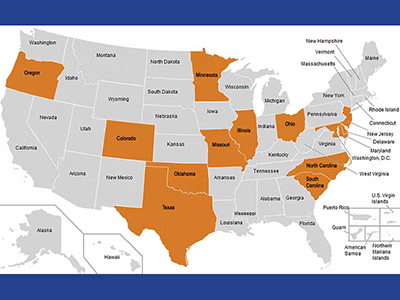
- Only 12 states were identified as having policies that address the accessibility of digital educational materials used in K–12 schools: Colorado, Illinois, Maryland, Minnesota, Missouri, New Jersey, North Carolina, Ohio, Oklahoma, Oregon, South Carolina, and Texas.
- Having a policy does not necessarily mean having comprehensive guidance for implementation. Although technical accessibility specifications were consistently addressed among the policies analyzed, guidance related to leadership, defined responsibilities, feedback loops, and sustained implementation was considerably less common.
- Many states already have a foundation to build on. Although most states do not have policies specific to the accessibility of digital educational materials used by schools, many have accessibility policies that apply to state government websites and other digital assets.
These existing state policies can provide SEAs with a starting point for developing more specific policies and guidance for school districts. NCADEMI’s Quality Indicators for the Provision and Use of Accessible Digital Educational Materials identify critical components for moving beyond technical requirements toward systematic and sustainable implementation.
Read the full report for a closer look at the findings, the currently available research on K–12 digital accessibility policy and practice, and the methods used to conduct the national scan.
Is your SEA or school district working toward implementing the ADA Title II final rule? Consider enrolling in NCADEMI’s virtual Professional Learning Group. Participants receive one year of targeted technical assistance through the PLG, followed by the option to join a Community of Practice for continued support.
The emerging policy landscape reveals a clear opportunity for stronger, more consistent state-level guidance to help schools move from accessibility requirements to sustainable implementation. As this policy landscape continues to develop, NCADEMI is here to support SEAs and school districts in that work.