
Clear writing helps students understand your course materials. It embraces plain or straightforward language, formatting, structure, and avoids unnecessary jargon and acronyms.
Why Clear Writing Matters
Writing clearly helps students understand information more easily. When language is simple and well-organized students can focus on the meaning without getting stuck on complicated words or confusing sentences. Clear writing can be especially helpful for students with learning and cognitive disabilities and students who use assistive technology.
Tips for Success
- Use short, simple sentences that focus on one main idea.
- Choose words that your students are familiar with over more complex words.
- Use headings and lists to break up information into manageable chunks of information.
- Define any new words that may be unfamiliar to your students.
- Avoid long paragraphs that may be overwhelming to some learners.
- Use a tool to check the reading level of your content to make sure it is appropriate for your students.
Need Support with Clear Writing?
Clear Writing Applied: Writing Clear Instructions
Ms. Brazzle, an 8th grade science teacher, is preparing instructions for an upcoming group project on the solar system. Remembering that many students struggled with the assignment last time, she wants to revise the instructions to make them clearer and avoid confusion.
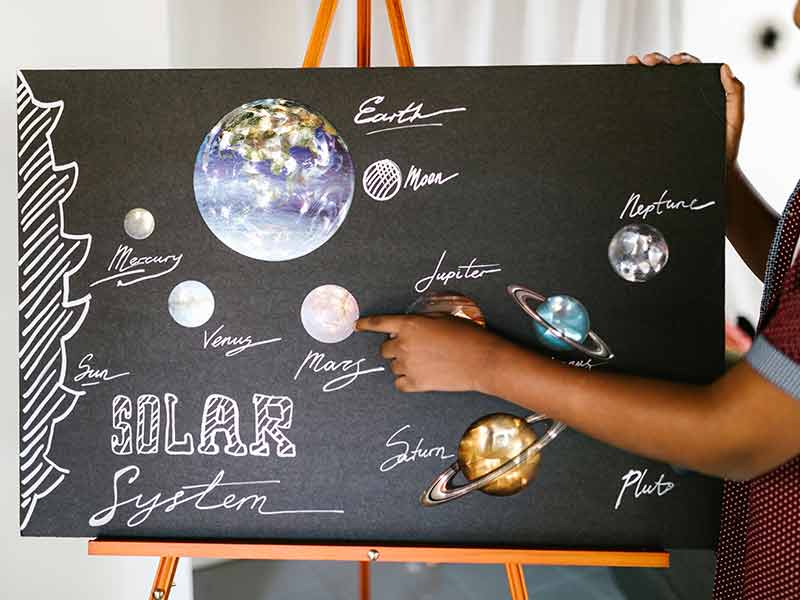
As she gets started, she thinks about Meadow, a student in her course who has a learning disability who often misses steps in assignments. Her goal is to write the instructions clearly enough for Meadow to follow, with the hope that all of her students will benefit.
She begins by reading the instructions aloud to herself and notices several ways they can be improved. She breaks the long paragraph of instructions into short introductory sentences followed by a list of step-by-step directions. She also adds definitions to help students understand the terms ‘orbit’ and ‘celestial’, which she introduces as part of the assignment.
When she finishes, she uploads the new version of the assignment to Google Classroom and is delighted to find that the project goes much better for everyone. Now Meadow can complete her part of the group assignment without missing any instructions!